Where Culture Meets Cuisine: Autumn Sierra’s Legacy on the Plate
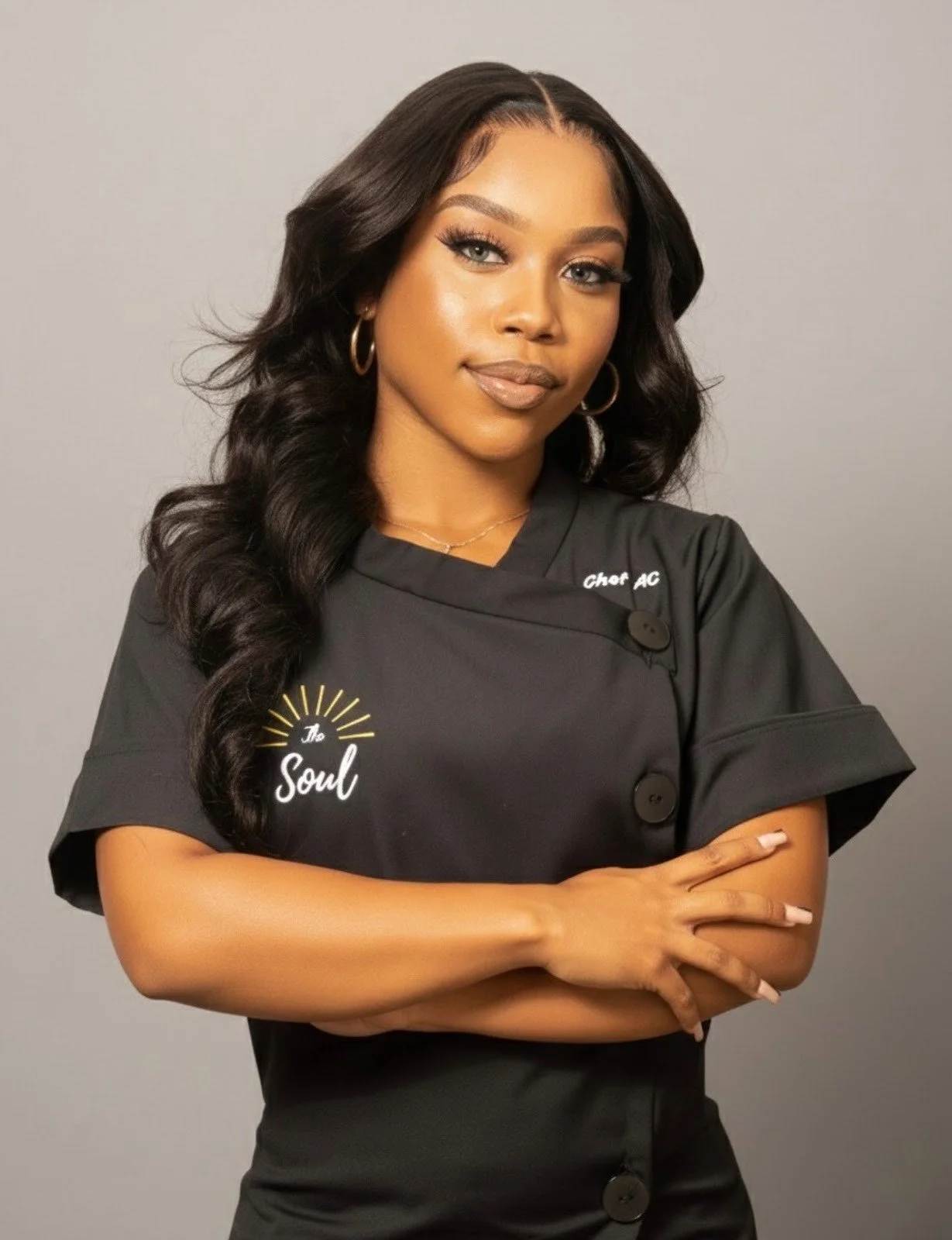
Image Credit: Teflon Jones
Autumn Sierra enters the kitchen to pay respect to the women who came before her, challenge tradition and preserve memory—all while rethinking what it means to appear powerful in culinary settings—rather than to perform.
Sierra, also known as Chef AC and popularly known as Chef in the Dress, has discreetly developed a culinary brand based on femininity, spirituality and generational heritage. Since starting her business in 2021, she has prepared meals around the United States and overseas, utilizing food as a storytelling tool as well as a source of nourishment—an offering molded by spiritual intention, science and soul.
For the chef, the kitchen has always been more than just a place to prepare food. It has long been a destination for aspiration.
“When I’m in the kitchen, that’s where I feel the most like myself,” Sierra said.
When she finished almost four caterings in a single day during a busy Thanksgiving season, that emotion came to the fore. The task was thoroughly familiar, but the pace was relentless. Many of the recipes were similar to those she used to make with her grandmother, whom she refers to as her first mentor.
“It felt like I was on a cooking show,” Sierra said, “That’s what I used to practice for when I was little.”
Growing up between Florence and Lancaster in South Carolina, Sierra discovered early on that cuisine was inherited rather than just a custom. Under the guidance of her grandmother and great-grandmother, who lived to be 100, she started cooking when she was six years old. Following the death of her great-grandmother, Sierra experienced a clear sense of obligation.
“It was like the baton was passed,” she said, “From her, to my grandmother, to me.”
After losing both her aunt and grandmother in the early years of her career, that calling became more intense.
“They were the reason I started my chef business,” Sierra said, “I had to carry what they gave me.”
Neither social media strategy nor branding trends gave rise to the idea of Chef in the Dress. Sierra had a dream about it.
“God gave me a dream, and I was a chef in a dress.” The Chef openly shared.

Image Credit: Teflon Jones
Sierra noticed at the time how homogenous culinary culture had become—functional, inflexible and even contemptuous of uniqueness. She felt driven to soften the edges of the profession without sacrificing power since she had a strong connection to femininity and fashion.
“I love fashion. I love beauty,” Sierra said, “I wanted to bring that into the kitchen.”
To realize the idea, she worked with seamstresses and drew ideas for more than a year. She looked for precedent but couldn't find any.
“There were no chefs in dresses. I realized I was creating something that didn’t exist yet.” She said.
For Sierra, visibility was more important than beauty.
“I wanted women to know you don’t have to remove parts of yourself to be taken seriously,” Sierra advised.
The culinary expert also relied on discipline, intuition and life experience to enter the culinary field rather than going to culinary school. She started at the age of 22, but she was frequently misidentified as much younger.
“I looked like I was 12,” Sierra openly shared.
Silent suspicion occasionally resulted from the lack of official credentials, especially in settings where chefs were older and mostly male.
“I had a lot to prove,” she said, “When you’re young, a woman and self-taught, people question your seriousness.”
Nevertheless, Sierra persevered, understanding that consistency, not just explanation, was the key to effective leadership.
Her company is still purposefully family-focused today. Her father serves as a sous chef with her, her mother oversees operations and her sister uses photography and video to record her work. In addition, she manages an expanding group of chefs who accompany her on big events.
“It’s important to me that this stays rooted in family,” Sierra said, “That’s where the soul comes from.”
Tradition and education both influence Sierra's cooking style. Her biological sciences degree from Clemson University, which she earned in 2020, has a direct impact on her career. For her, everything is an experiment, including eating.
“Food is science,” she said, “Every dish is an experiment.”
That mindset informs her company, The Soul of American Cuisines, also called The Soul of AC—a name that honors both her initials and her mission.
“I wanted to challenge the idea that soul food has to be unhealthy,” Sierra said.
She became deliberate about oils, preparation techniques and ingredient sourcing—without removing ethnic identity—after seeing health issues in her own family.
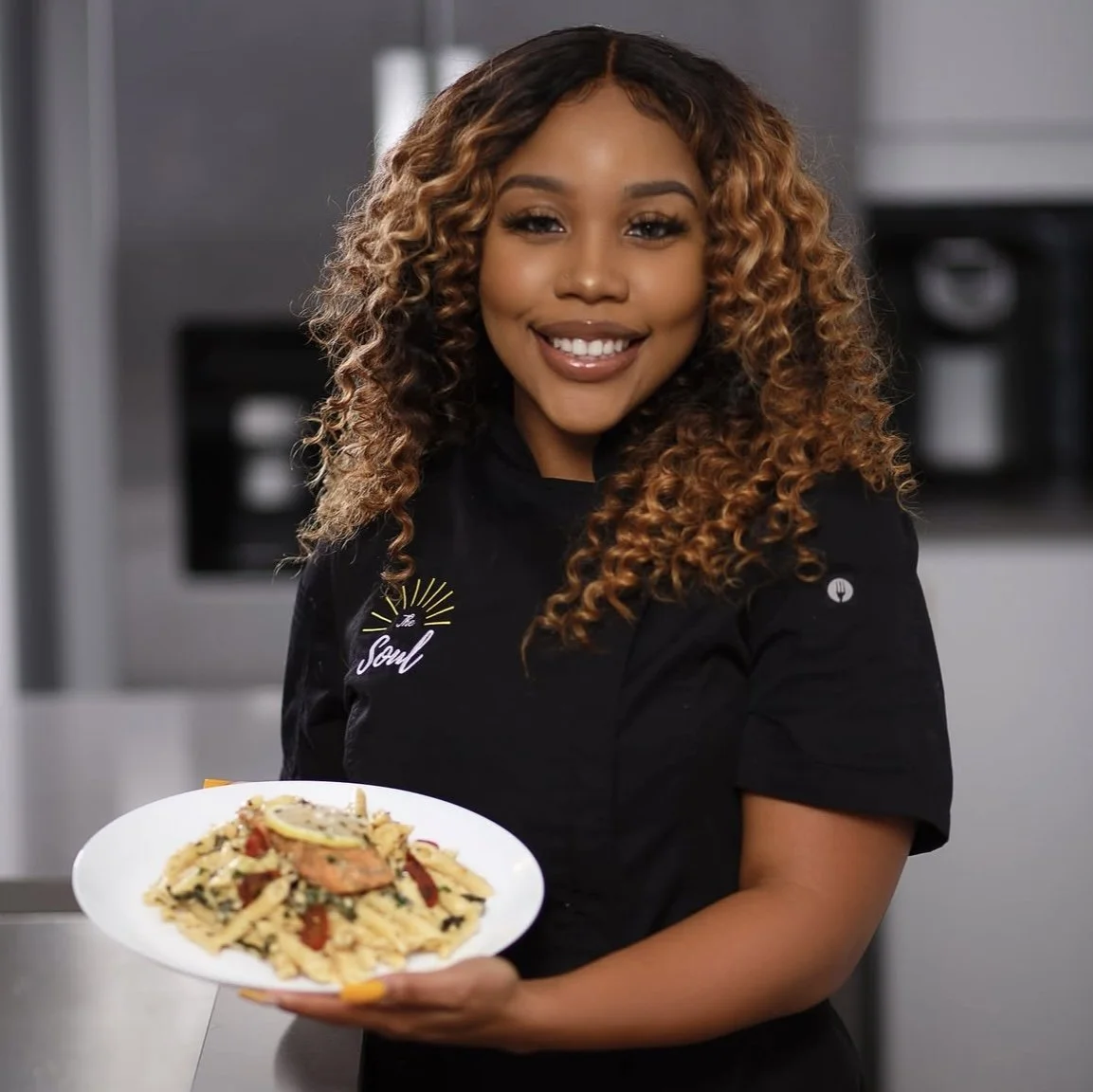
Image Credit: Teflon Jones
“I wanted people to experience the soul in a way that sustains them,” she said.
Beyond private dining and catering, Sierra has developed a digital presence as a food reviewer, gaining the respect of over 30,000 followers via integrity and moderation. She frequently goes to restaurants without disclosing her platform, preferring to interact with establishments as a regular customer. Sierra is cautious not to destroy little companies at the same time.
“I know how hard it is to build something,” she said, “I don’t believe in shaming—only in transparency.”
After suffering a miscarriage and losing a loved one in 2024, Sierra stopped using social media. She permitted herself to stop for the first time. She had long suppressed her feelings of loss and burnout in the name of work, but that period of quiet pushed her to face them.
“God told me I had to sit down,” she said. “
Her limits were now shaped by her faith, which had always guided her business.
“Purpose requires rest,” she said.
Renewing her focus and basing her work on alignment and intention defines success in terms of meaning rather than profit. She continues to challenge simplistic portrayals of Black cuisine through travel and cultural inquiry, highlighting its complexity, regionality,= and cultural diversity while fostering creativity and community.
“Success used to mean money. Now it means alignment,” Sierra said. “There’s more to our food than what social media shows—it’s regional, layered and intentional.”
For Sierra, food is an open space where heritage, faith and vision come together to symbolize freedom and artistic expression. Her art, which is driven by intention rather than perfection, continues to be based on respecting the past while creating something enduring.
Her goal stays constant as she looks ahead, respecting the past while creating space for the future.
“I want people to taste my roots,” she said. “My home. My faith.”
According to her, legacy is about impact rather than perfection.
“Legacy is leaving something behind that outlives you,” Sierra said. “And whatever season you’re in right now—it’s temporary.”
Autumn Sierra is not just preparing meals through intention, grace and bold creativity; she is also reclaiming femininity, conserving memory and creating an enduring legacy.